
1.8 Å resolution structure of β-galactosidase with a 200 kV CRYO ARM electron microscope
Merk A, Fukumura T, Zhu X, Darling JE, Grisshammer R, Ognjenovic J, Subramaniam S. IUCrJ 7: 639-43 (2020)
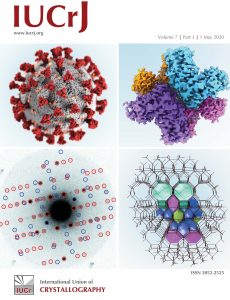
IUCrJ
IUCrJ May 2020, Vol 7 No. 3 Read the abstract

The National Cryo-EM Facility at Frederick National Laboratory: Operational Procedures, Methods, and Outputs
Baxa U, Edwards TJ, Hutchison M, Wier AD, Finney J, Wang H, Subramaniam S. Microscopy Today, Cambridge University Press 28: 12–17 (2020)
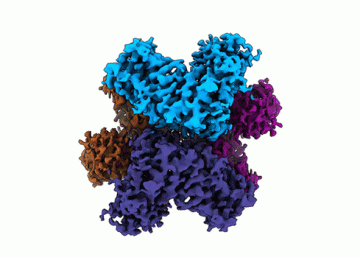
UBC discovery opens new avenues for designing drugs to combat drug-resistant malaria
UBC News | Phys.org [May 1, 2020] For the first time, UBC researchers have shown a key difference in the three-dimensional structures of a key metabolic enzyme in the parasite that causes malaria compared to its human counterpart

Subramaniam Lab awarded Rapid Response Funding for COVID Research
GenomeBC [April 30, 2020] Structure-guided design of therapeutics and antibodies against COVID-19

UBC discovery opens new avenues for designing drugs to combat drug-resistant malaria
EurekAlert! [April 30, 2020] The finding, recently published in the International Union of Crystallography Journal (IUCrJ), brings researchers one step closer to developing new therapies to combat drug-resistant malaria

Host membrane lipids are trafficked to membranes of intravacuolar bacterium Ehrlichia chaffeensis
Lin M, Grandinetti G, Hartnell LM, Bliss D, Subramaniam S, Rikihisa Y. Proceedings of the National Academy of Sciences USA 117: 8032-43 (2020)

Subramaniam Lab listed as one of key groups working on COVID-19 at UBC
UBC COVID-19 Research [April 17, 2020] UBC researchers across all domains are focusing on many different aspects of COVID-19 and its impacts.

Plasmodium vivax and human hexokinases share similar active sites but display distinct quaternary architectures
Srivastava SS, Darling JE, Suryadi J, Morris JC, Drew ME, Subramaniam S. IUCrJ 7: 453-61 (2020)
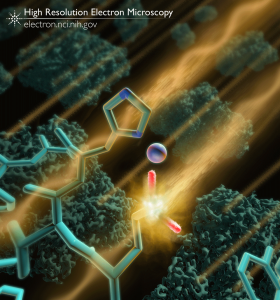
Imaging Proteins Using Electrons
Imaging with electrons allows researchers to discern atomic details of large, complex molecules like proteins. During the imaging process, the interaction of electrons with the molecules being imaged inflicts damage that can alter the structure. Cryogenic temperatures (cryo-EM) can reduce the extent of this damage, but as we showed in a recent study, some parts […]