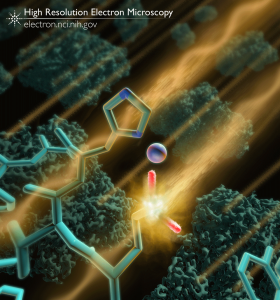
Imaging Proteins Using Electrons
Imaging with electrons allows researchers to discern atomic details of large, complex molecules like proteins. During the imaging process, the interaction of electrons with the molecules being imaged inflicts damage that can alter the structure. Cryogenic temperatures (cryo-EM) can reduce the extent of this damage, but as we showed in a recent study, some parts […]
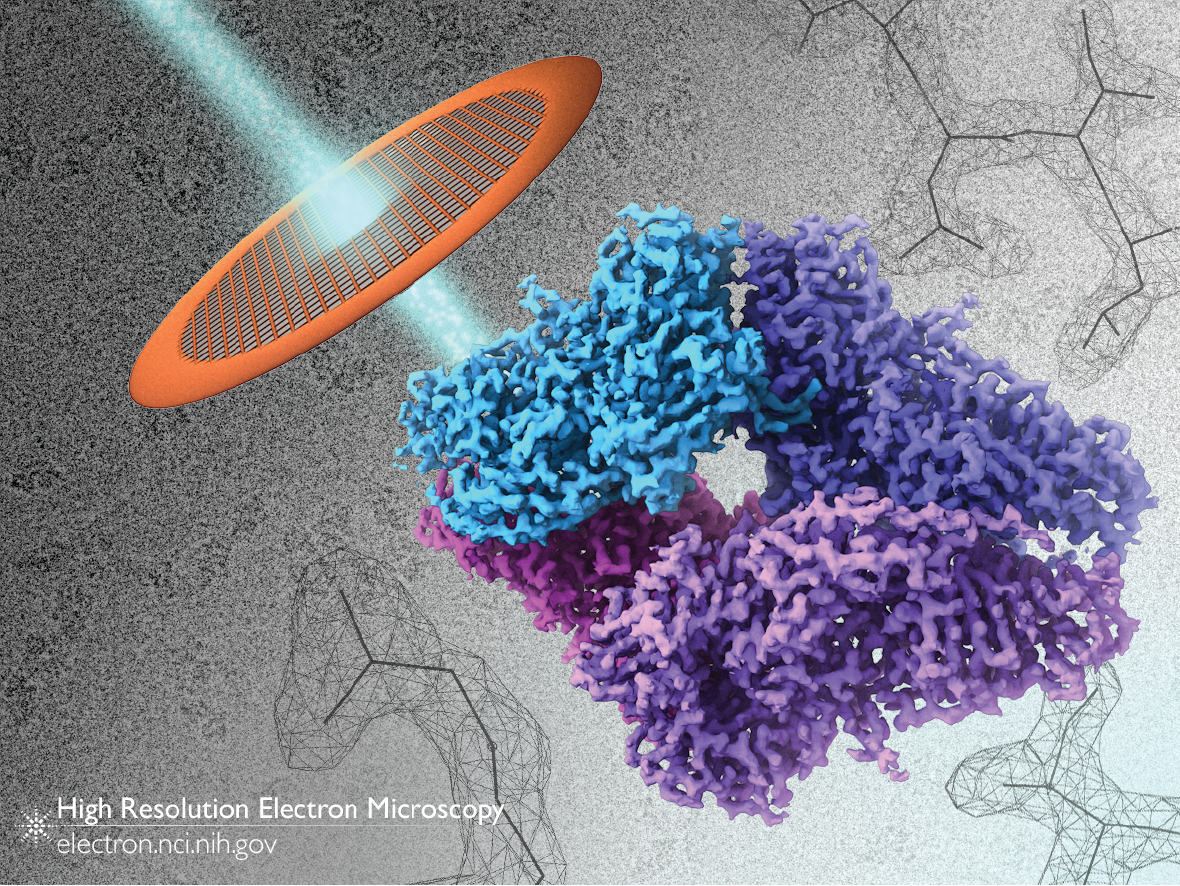
Visualizing Proteins with Cryo-EM
This image displays a number of the critical elements for determining the structure of a protein by cryo-electron microscopy. First, a solution containing many identical copies of a protein are spread on a grid (upper left), and quickly frozen to liquid nitrogen temperatures. These are imaged with an electron beam (teal), producing black-and-white images showing […]
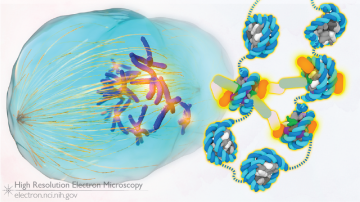
Foundations of the Kinetochore
The eukaryotic genome is structurally coordinated by histones, small disc-like protein complexes that are each wrapped twice by the DNA double helix. In addition to helping pack the long strands of DNA, histones have a variety of functions that regulate the use of the genome to express proteins. These histone-DNA complexes are called nucleosomes. When […]

HIV in the Brain
The human immunodeficiency virus (HIV) primarily attacks helper T cells, rapidly-dividing cells that are critical components of the immune system. The immune system keeps the virus in check by eliminating infected T cells. However, the virus can also occasionally invade long-lived cells like macrophages in the blood, or astrocytes in the brain, hiding away and […]

The CRISPR Defense
CRISPR systems are well known for their use as DNA editors in the lab – but these complexes evolved in bacteria as a way for the cells to defend themselves against invading viruses. Although these systems are highly diverse – CRISPR complexes have evolved to handle a variety of RNA and DNA elements – they […]
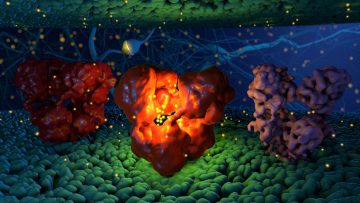
Gating Cycle of the Glutamate Receptor
Ionotropic glutamate receptors (iGluRs) belong to a diverse family of channels critical for signaling in the nervous system. Prior to glutamate binding, these receptors sit in a “resting” conformation, ready to receive a signal. Glutamate binding to the receptor causes its channel into the cell to “open”, allowing cations such as sodium and potassium to […]
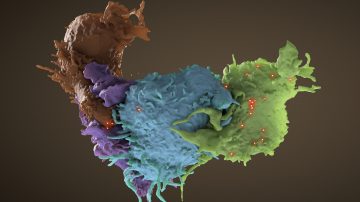
T cells Transfer HIV
The human immunodeficiency virus (HIV) is the causative agent for AIDS (or Acquired Immune Deficiency Syndrome). The virus primarily infects CD4+ T cells, a class of immune cells critical for defense against a variety of pathogens, including HIV itself. HIV uses the cell surface molecule CD4 to bind and invade T cells. Infected T cells […]
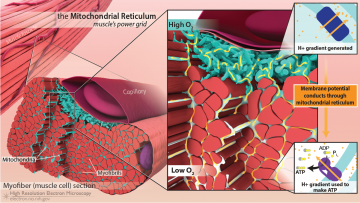
Powering Up Muscle
Because of their special function – spending energy to generate large-scale movement – skeletal muscle cells need a unique solution for how to manage energy. The biggest challenge is carrying that energy from capillaries, where oxygenated blood delivers fresh oxygen to the muscle cells, deep into the tissue. Mitochondria, cellular “power houses”, use oxygen and […]
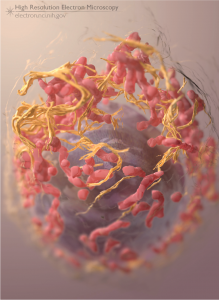
Stepping into a Melanoma Cell
The image above shows the internal organization of a melanoma cell, a cancer cell descended from pigment-containing skin cells. This image was generated from data acquired with focused ion beam scanning electron microscopy (FIB-SEM), a method for 3D imaging of cells that we have been developing in our laboratory for several years. In a study […]
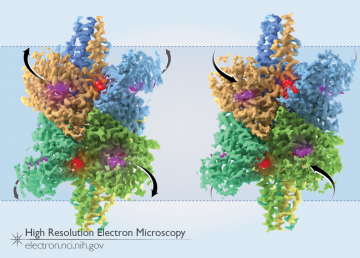
Two States of Glutamate Dehydrogenase
The enzyme glutamate dehydrogenase (GDH) functions as a critical part of the metabolic machinery of most cells. This enzyme converts the protein building-block glutamate to α-ketoglutarate, with the help of the small molecule “co-enzyme” NADH. During its catalytic cycle, GDH shifts from an “open” conformation (the catalytic pocket, with binding sites for glutamate and NADH, […]